


- New PRGE 2026 Game Releases!
- New Games from the 2026 Midwest Gaming Classic!
- New 2600 and 7800 Games from 2025 PRGE!
- New 2600, 5200, 7800, and Intellivision games!
- E.X.O. Collector's Edition Available Now!
- 7th Annual Atari Homebrew Awards - Vote Today!
- Jumping at Shadows and Xenowings Now Available!
- Welcome to the new AtariAge Store!
- AtariAge Day 2023 at ZeroPage Homebrew!
- New 2600, 5200, 7800, Jaguar, and Lynx Games Arrive!
- See All News...


Atari 7800+ Console & Gamepad
Atari 7800+ Console & Gamepad
Couldn't load pickup availability


GET YOUR PIXEL FIX LIKE IT'S 1986.
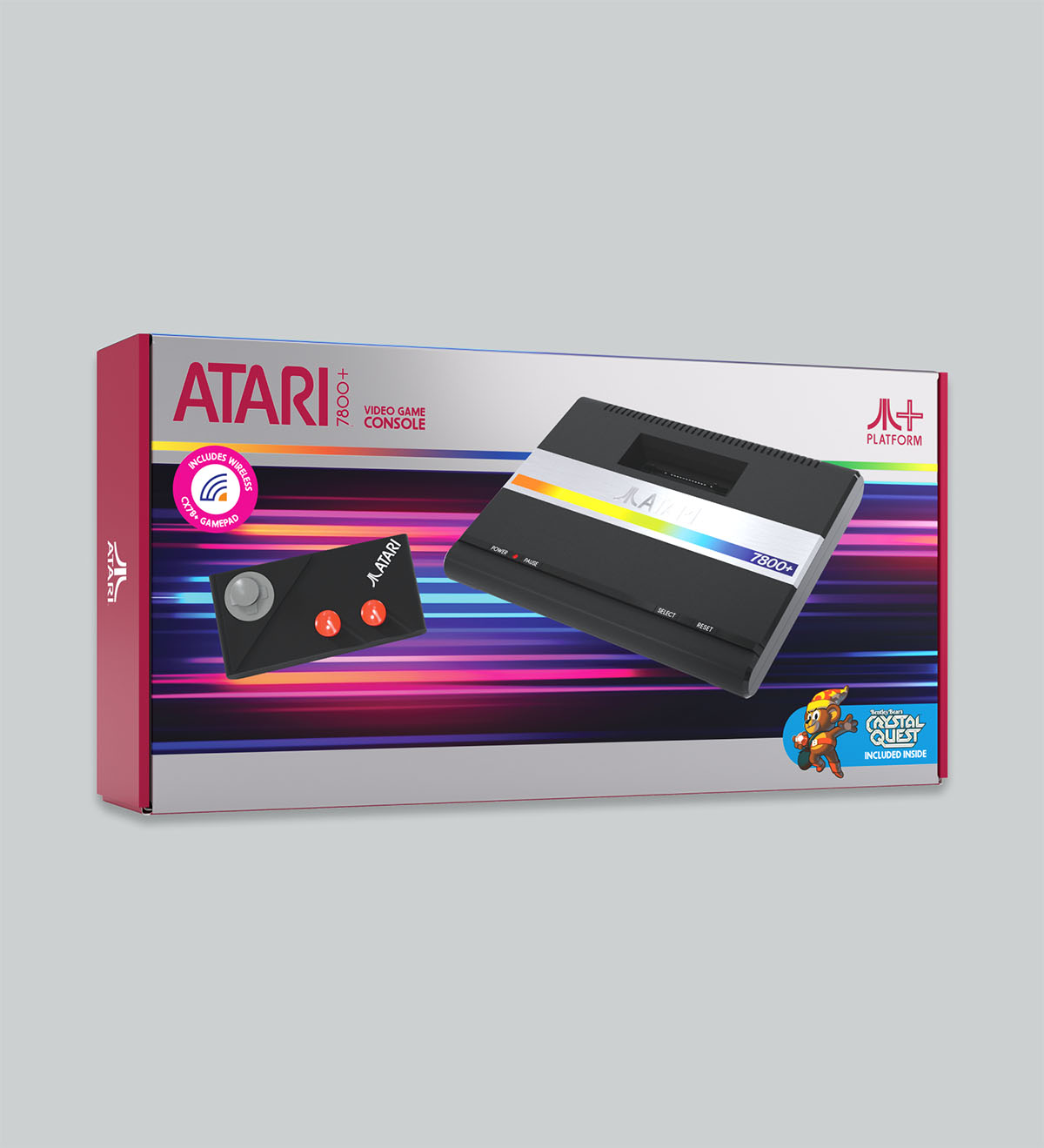
The new Atari 7800+ joins the ranks of such timeless design icons as shoulder pads, crop tops, and aviator sunglasses! Inspired by the original ‘80s design, this scaled-down version fits today’s living rooms and connects easily to modern TVs via HDMI. It supports both 2600 and 7800 game cartridges and comes with the new Wireless CX78+ Gamepad, an untethered recreation of the radical controller Atari released with the 7800 in Europe in the ‘80s. Use its two-button gaming power to journey through Bentley Bear’s Crystal Quest, the brand-new cartridge sequel to Crystal Castles.
Features:
- Plays both Atari 2600 and 7800 game cartridges
- Near-perfect compatibility with original and third-party Atari games
- Includes the new Wireless CX78+ Gamepad for all of your two-button, gaming needs
- Easily connects to any screen via HDMI
- Widescreen or 4:3 viewing options for all displays
- Included cartridge Bentley Bear’s newest 7800 adventure; Bentley Bear’s Crystal Quest
- USB-C charging cable (wall charging plug not included)
To discuss the Atari 2600+, Atari 7800+, Atari Plus accessories and games, please visit our Atari 2600+/7800+ Forum.